
Published · By Henry Palma
How to Pick a Memory Match Theme for Kids, Language Learners and Adults
Animals, food, robots, numbers or words? Match the theme and difficulty to the player so memory games stay fun for young kids, early readers, language learners and adults.
A memory match game is simple: flip two cards, find the pair. But what's on the cards changes the whole experience. A picture of a dog is easy for a four-year-old. A word card asks a reader to read and remember at the same time. Picking the right theme for each player keeps the game fun and makes the practice count.
Why the theme matters
Your brain remembers different things in different ways. Pictures are usually the easiest to recall. Numbers and words add a step, because you have to read or recognize them first. That extra step makes the game harder, and also more useful for certain goals.
So the question isn't just "which theme looks nice?" It's "what does this player need to practice?"
Young kids: start with pictures
For little ones, keep it bright and familiar.
- Animals are a great first theme. Kids already know them and love naming them.
- Food works well too. It's familiar and fun to talk about.
- Robots are a nice change once a child is bored of the others.
Tips for young players:
- Say the names out loud as cards flip. It turns the game into a vocabulary moment.
- Start at the easiest level and let them win a few times.
- Play together at first, then let them try solo.
Early readers: add numbers and words
Once a child is starting to read, numbers and words are a good next step.
- Numbers help with recognizing digits quickly.
- Words turn every flip into a tiny reading exercise.
Keep the difficulty low when you first switch. Reading plus remembering is a lot at once. Once they're comfortable, raise the level.
Language learners: English and Spanish word matching
If someone in your family is learning English or Spanish, word matching is a fun, low-pressure way to practice.
- Read each word out loud when it flips over.
- Say the meaning in your stronger language before making the match.
- Play short rounds often instead of one long session. Small, regular practice helps words stick.
This works for kids and adults. It's also a nice way for bilingual families to play together.
Adults: make recall work harder
For adults who want a real memory workout, pictures can feel too easy. A few ways to push yourself:
- Choose numbers or words. They're harder to picture, so you have to work to remember them.
- Raise the difficulty level until you're making a few mistakes, but not guessing.
- Skip the hints. Try to finish each board on your own memory.
- Chase your best time. Compare times at the same level and theme so the number means something.
Pair the theme with the right level
Theme and difficulty work together. A good rule of thumb:
- New theme? Drop the level. Get used to the cards first.
- Comfortable? Raise the level. Keep the same theme while you level up.
- Bored? Switch the theme. A fresh theme at a familiar level feels new again.
If a player starts guessing at random, the combination is too hard. Go back a step.
Keep it fresh
- Rotate themes every few days so the game doesn't get stale.
- Try the Daily challenge for a quick new puzzle each day.
- Play with a friend in two-player mode for some friendly competition.
How Memory Match helps
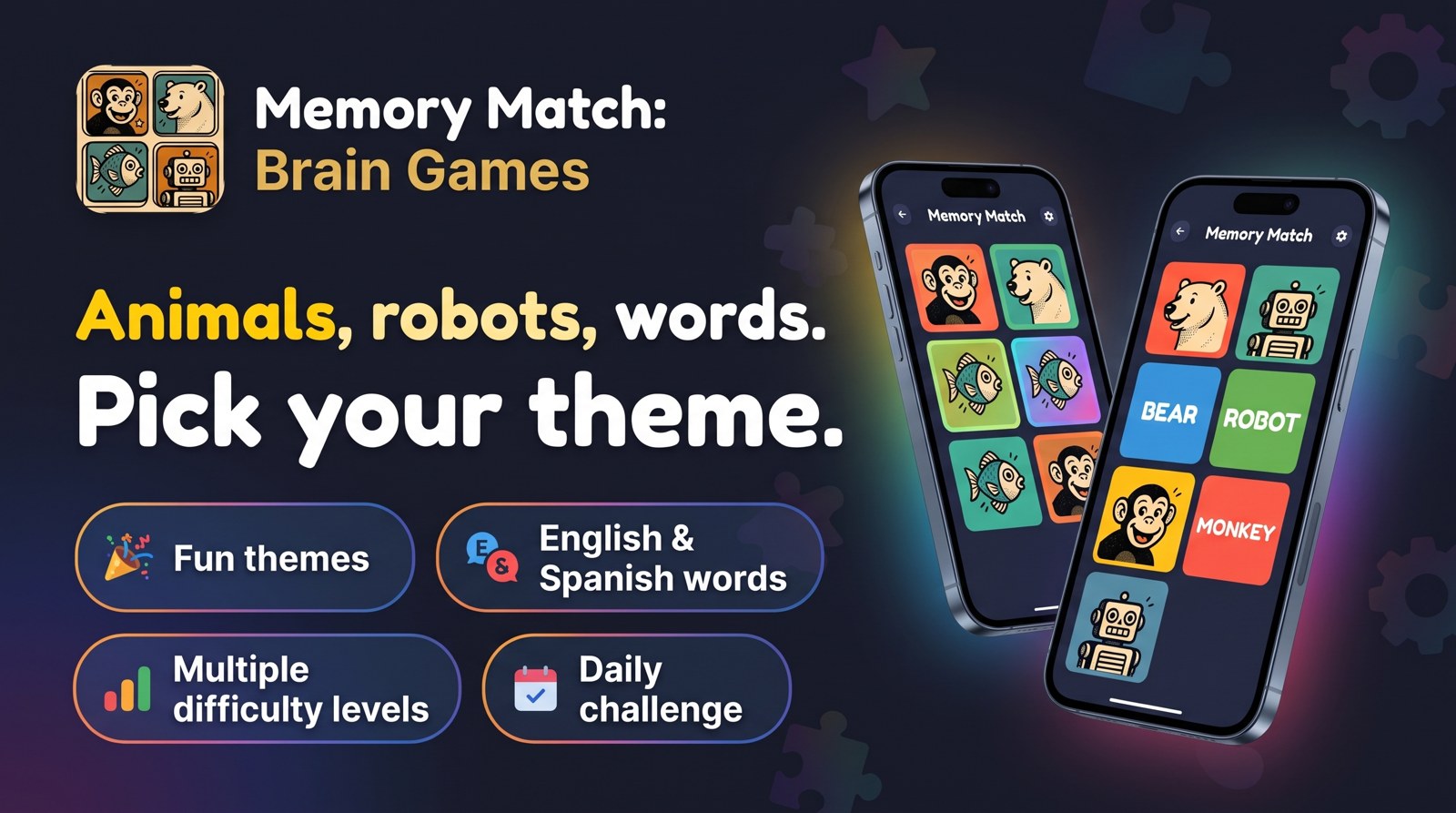
Memory Match: Brain Games has fun themes including animals, food, robots, numbers and words, plus English and Spanish word matching. Choose from multiple difficulty levels, use hints in solo play, and track your best time. You can also take on the Daily challenge or play a friend in turn-based two-player local mode.