
Published · By Henry Palma
Merengue Basic Step for Beginners: March, Soft Knees, and Hip Motion
Learn the merengue basic step: one weight change per beat, soft knees for natural hip motion, simple ways to travel, and a short practice routine for beginners.
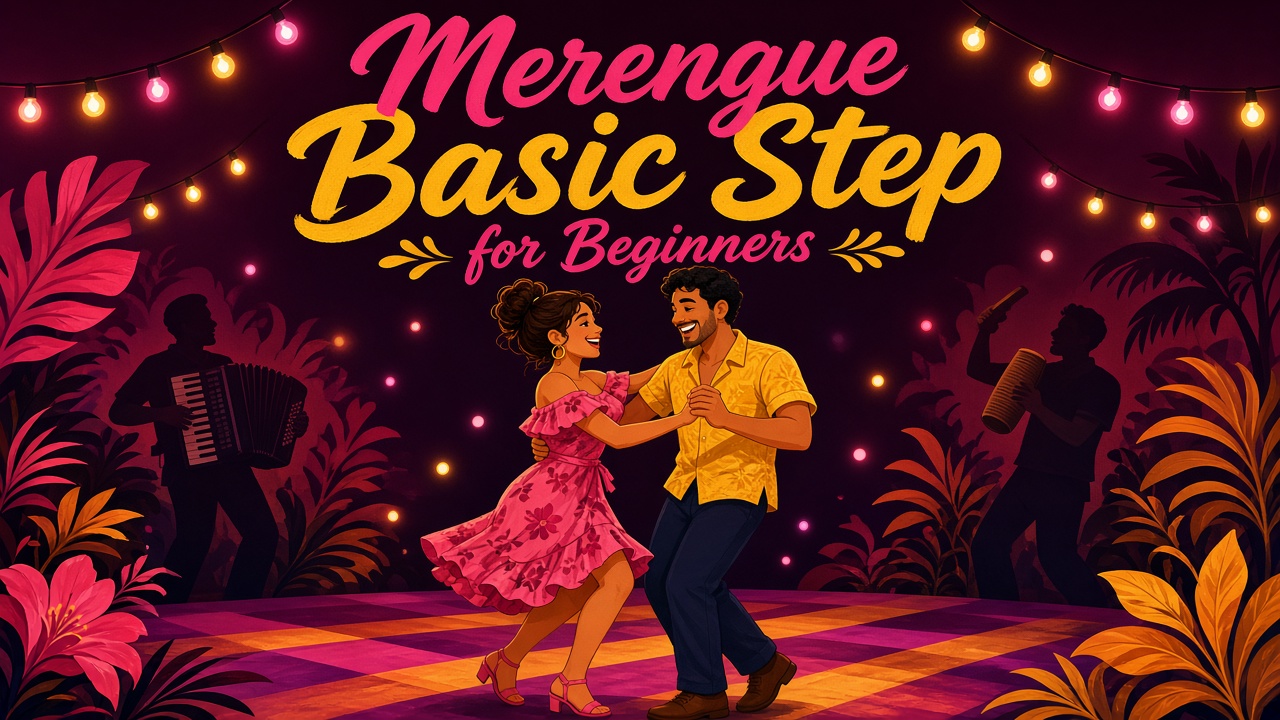
The merengue basic step is a march: one small step on every beat, shifting your full weight from one foot to the other while your knees stay soft. If you can walk in time to music, you can dance merengue tonight. This post covers how to do the step, where the hip motion comes from, and a few simple ways to move once the basic feels easy.
Why merengue is a good first Latin dance
Merengue comes from the Dominican Republic, and its basic step has no pauses, taps, or quick-quick-slow rhythms to track. Every beat gets one weight change. That makes it a common first dance at Latin socials, and it is the dance you are most likely to be pulled into at a family party.
How to hear the beat
Merengue music has a steady, driving pulse. Listen for the güira (a metal scraper) or the tambora drum and step on each beat you hear. You can count in eights like other Latin dances, 1 through 8, but every count is a step, so you do not need to find a special "1" to get started. Just match your feet to the pulse.
The basic step, one beat at a time
- Stand with your feet about hip-width apart and your knees slightly bent.
- On count 1, shift your weight onto your left foot.
- On count 2, shift your weight onto your right foot.
- Keep alternating, left, right, left, right, one weight change per beat.
Your feet barely leave the floor. Think of a small march in place, not a high-knee march. Keep your steps short and your upper body calm and upright.
Where the hip motion comes from
Don't try to swing your hips on purpose. The hip action in merengue comes from your knees. When you step onto one foot, that knee straightens slightly while the other knee bends. That alternating bend and straighten makes the hips move on their own.
If your hips look stiff, check two things:
- Are you fully changing weight? If you leave weight on both feet, nothing moves. Commit to each foot.
- Are your knees locked? Soft knees are what create the motion. Locked knees kill it.
Moving the basic around the floor
Once the march in place feels natural, keep the same one-step-per-beat timing and travel:
- Side step: Step your left foot to the side, then bring your right foot to meet it. Repeat for a few counts, then go the other way.
- Forward and back: March a few steps forward, then a few steps back, without changing the rhythm.
- Turning in place: Keep marching while you slowly rotate a little with each step until you face a new direction.
The rule never changes: one weight change per beat. If you lose the timing, go back to marching in place until you catch it again.
Dancing with a partner
In a social setting, merengue is usually danced in a closed hold. The leader's right hand rests on the follower's back, the follower's left hand rests on the leader's shoulder, and the other two hands are joined. Both partners march the basic together, usually on opposite feet so they mirror each other. Keep your frame gentle and your steps small so you don't step on each other.
A simple practice routine
- Put on a merengue song and march in place for the whole song, focusing only on staying on the beat.
- Play a second song and focus on soft knees and full weight changes so the hips start to move.
- Play a third song and practice the side step, forward and back, and turning in place.
Short, repeated sessions help more than one long one. A few songs a day is enough to make the basic automatic.
Keep the moves you learn
When a teacher shows you a new merengue turn or arm pattern, it is easy to forget it by next week. Sweet Dance Moves Library lets you keep a searchable library of dance move tutorials, so you can save what you learn in class and find it again when you practice.