
Published · By Henry Palma
Fixed Costs Gig Drivers Forget: Insurance, Phone, and Other Recurring Bills
Insurance, phone plans, and car payments never show up next to a trip. Log them as recurring expenses so your monthly gig profit reflects what you really keep.
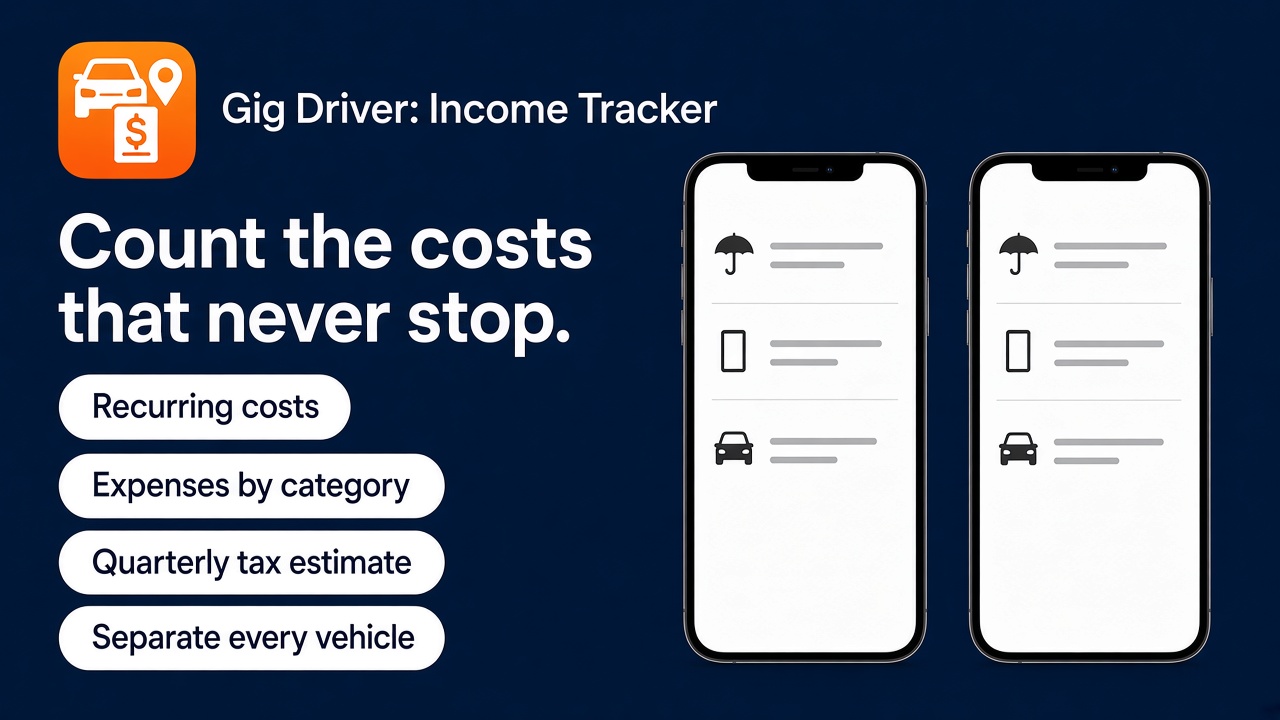

Your real profit as a gig driver is your payouts minus every cost of staying on the road, including the costs that never show up next to a trip. Insurance, your phone plan, car payments, and subscriptions are billed monthly or yearly, so they are easy to leave out when you judge a good week. Log them as recurring expenses and review them together with your income, and your weekly numbers stop looking better than they are.
This is a recordkeeping method, not tax advice. How these costs are handled on a tax return depends on your situation, so check the details with a tax professional.
Per-trip costs and fixed costs are different problems
Gas, car washes, parking, and tolls feel like part of driving because you pay them while you drive. You see the receipt in your hand, and most drivers remember to log them.
Fixed costs work differently. They arrive on a schedule whether you drove 10 hours or 50 that week:
- Auto insurance
- Your phone plan, which runs the apps that pay you
- A car loan or lease payment
- Registration and other yearly vehicle fees
- Any paid subscriptions you use only for driving
Because these bills hit your bank account once a month or once a year, they rarely land in the same week you review. A week can look profitable on payouts and gas alone, even though part of the month's insurance and phone bill belongs to it too.
Make a list of every cost that repeats
Start with one pass through your bank and card statements for the last few months. Write down every charge that is connected to your driving and repeats on a schedule. For each one, note the amount, how often it bills, and which vehicle it belongs to if you drive more than one car.
Then decide how much of each cost really belongs to your gig work. Your insurance and car payment cover the car whether you are driving for an app or going to the store, and your phone is probably not used only for work. You do not need a perfect split to run your business, but you should be consistent. Pick a method, write it down, and use the same method every month.
Log fixed costs as recurring expenses
Once you have the list, enter each cost once as a recurring expense instead of typing it every month. Gig Driver lets you log expenses by category, including gas, maintenance, insurance, and phone, and set up recurring costs so they show up on schedule. When you have more than one vehicle, keep each car's insurance and payments with that car so its costs are not mixed with the other one.
When a bill changes, such as an insurance renewal at a new price or a new phone plan, update the recurring entry right away. An old amount that keeps repeating is worse than no entry, because it looks correct.
Review profit by month, not only by week
Weekly reviews are good for checking payouts, but fixed costs make more sense against a full month. Compare a month of income from all your platforms with a month of expenses, including the recurring ones. That gives you a profit number you can actually plan around.
A few questions are worth asking each month:
- Did income cover all of the fixed costs before you count gas and maintenance?
- How many hours or miles did it take to cover the fixed costs?
- Did any fixed cost go up since last month?
The second question is the useful one. If it takes the first part of every month just to pay for the car and the phone, that changes how you think about a slow week, a second vehicle, or a more expensive insurance policy.
Profit and tax deductions are separate questions
Tracking a cost for profit is not the same as deducting it on your taxes. For example, the IRS says that if you use the standard mileage rate, you do not deduct actual car costs such as gas, insurance, and repairs separately, because the rate is meant to cover them. Business parking fees and tolls are an exception and can be deducted on top of the standard mileage rate. If you use the actual expense method instead, the vehicle costs themselves matter for the deduction.
Either way, you still want the full list of fixed costs in your records. It tells you whether driving is paying you, and it gives a tax preparer what they need if the actual expense method turns out to be the better fit. Keep your mileage log complete for the same reason, because both methods depend on knowing your business miles.
Use the totals for your tax planning
Gig Driver's quarterly tax estimate is based on the income and expenses you have actually logged. If your recurring costs are missing, the estimate is working from incomplete numbers. Keeping fixed costs current makes the estimate and your own planning more accurate. Treat the figure as a planning estimate and confirm it with a tax professional.
At the end of the year, you can export a year-end tax report as a CSV or PDF for yourself or your accountant. Records sync to your private iCloud, and no account is needed, so the list you built in January is still there in December.
A short checklist
- List every driving-related cost that repeats, with its amount and billing schedule.
- Decide how much of each cost belongs to your gig work, and keep that method consistent.
- Enter each one once as a recurring expense, by vehicle when you drive more than one car.
- Update the entry as soon as a price changes.
- Review income against all costs once a month, not only gas and payouts.